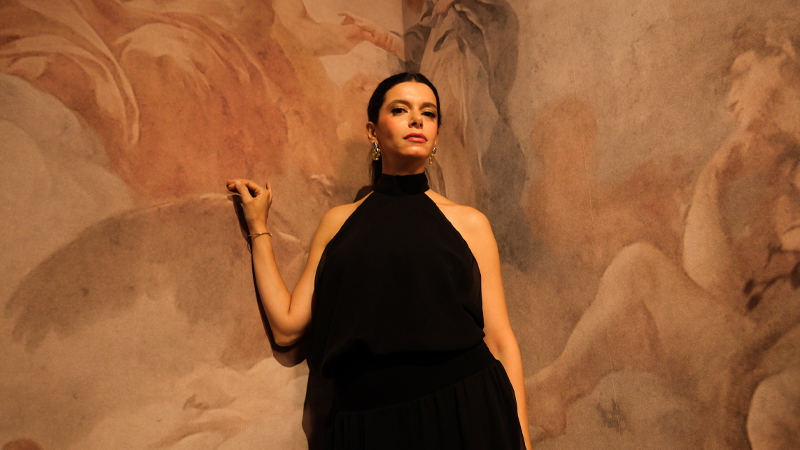
In the quiet, electric space between the flash of cameras and the steady hum of a rolling lens, Basma Nabil commands the room with the effortless grace of a true ÉCLAT cover star. The modern screen moves fast, but the human heart does not. In an era dominated by rapid scrolling and instant engagement, the art of storytelling has had to evolve, shrinking its runtime without ever diluting its emotional core.
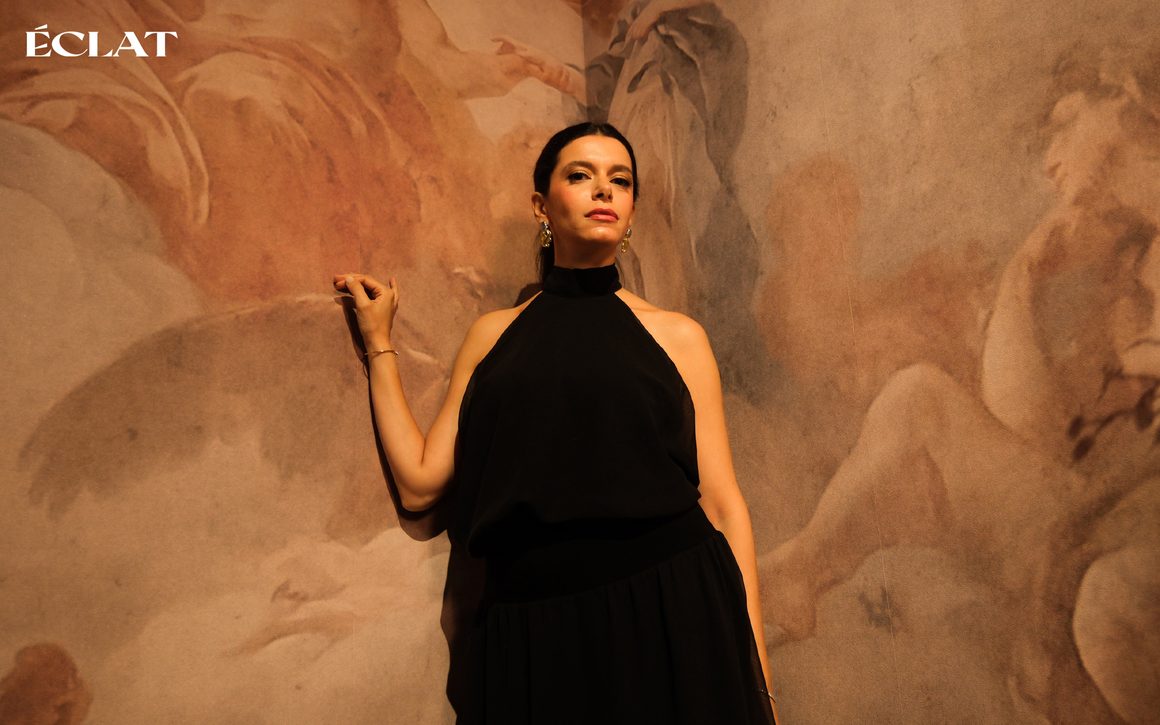
Reflecting on the distinct pulse of digital platforms, the experience of working on projects like Minfaresh Maah Siyana brings a unique satisfaction. Web-driven drama demands a precise rhythm. As she said, “The audience is accustomed to fast content, but that does not mean the emotions themselves should be fast; the challenge is to abbreviate time, not feeling.”
That delicate tension between brevity and depth becomes even more pronounced in experimental formats. In Discomfort Zone, the objective shifted toward capturing a complete, multi-layered character arc within an exceptionally compressed timeframe. It is a masterclass in economy, relying entirely on dialogue, heavy silence, and reactive micro-expressions. This specific constraint is precisely what makes short-form drama both daunting and exhilarating, requiring an acute intensity from the performer with no luxury of a gradual, long-form runway to build a character.
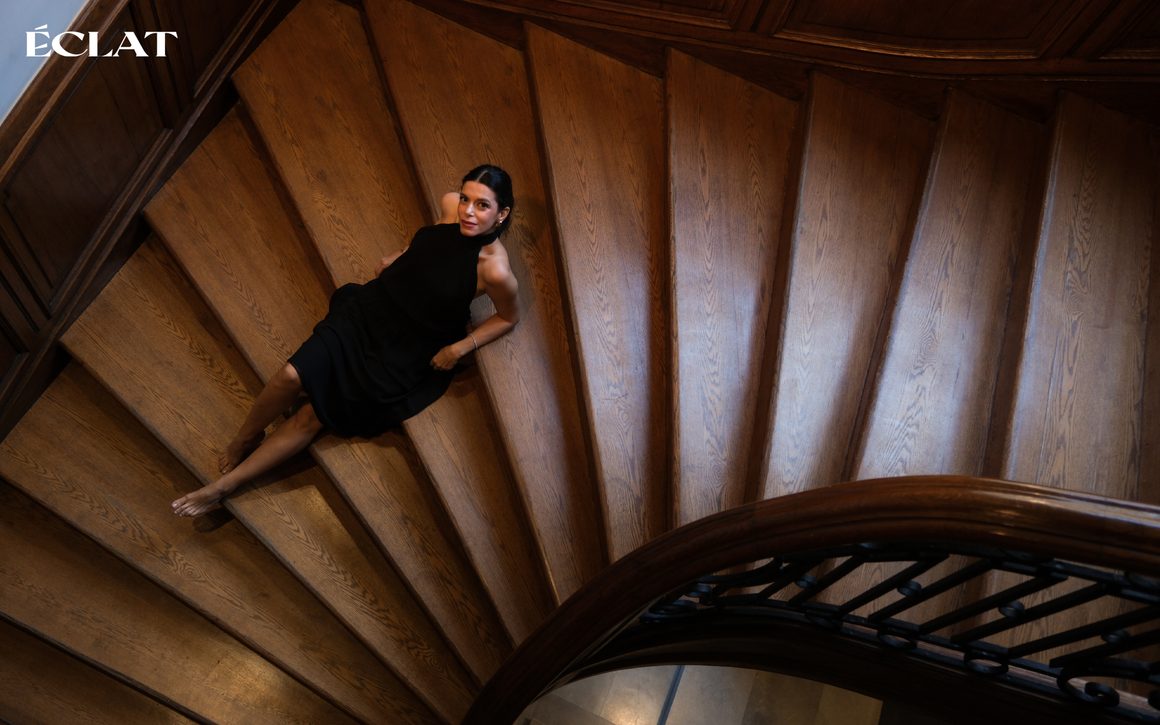
Yet, this mastery of pacing scales fluidly into the cinematic world, where timeless narratives meet powerhouse collaborations. On the horizon stands the highly anticipated feature film Banat Faten, uniting a stellar ensemble led by the legendary Youssra. Stepping onto set alongside such an icon is a transformative masterclass in its own right. As she said, working alongside Youssra revealed that “real experience shines in the smallest details—in the way she handles her character, interacts with the camera, and treats the crew.” Guided by the creative synergy of writer Mohamed Nader and director Amina Mostafa, every nuance of the narrative was meticulously crafted, creating an electric anticipation for its upcoming public premiere.

Beyond the screen, this dedication to narrative depth extends into cultural conversations. Speaking at the 46th Cairo International Film Festival during a panel on the power of storytelling and mental health, the discussion centered on how psychological drama shapes the collective consciousness of both viewer and performer. Acting, at its core, is an exercise in radical empathy. The more complex the persona, the deeper the obligation to understand rather than judge.
This psychological rigor carries profound responsibility. Crafting complex characters requires deep research and psychological clarity, yet demands a healthy boundary. As she noted, “It is not required for an actor to live the suffering of the character, but rather to understand it and portray it with absolute honesty.”

This balance of heritage, modern tools, and raw empathy was a central theme during the recent Bridge Summit panel exploring the evolution of storytelling in regional cinema. Navigating today’s landscape presents a dual reality: emerging talents face the relentless pace of digital evolution, yet benefit from unprecedented global access. Technology has democratized the gateway to the industry, but algorithms and platforms alone cannot replace craft.
True longevity requires continuous learning, experimentation, and a profound respect for the mechanics of cinema. The ultimate triumph lies in speaking the language of modern narrative innovation without ever erasing our cultural roots. By keeping our authentic voices intact while refining our storytelling instruments, our stories can cross borders, bridging local truths with a universal audience.