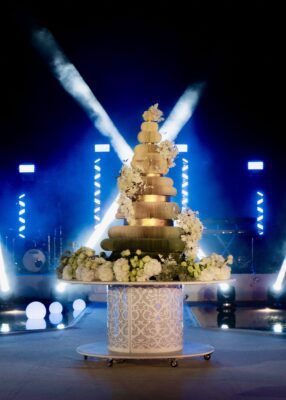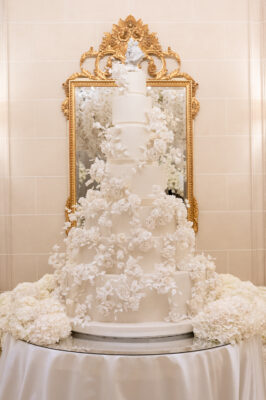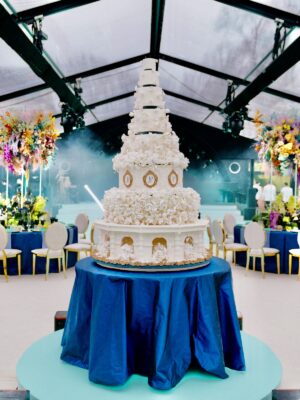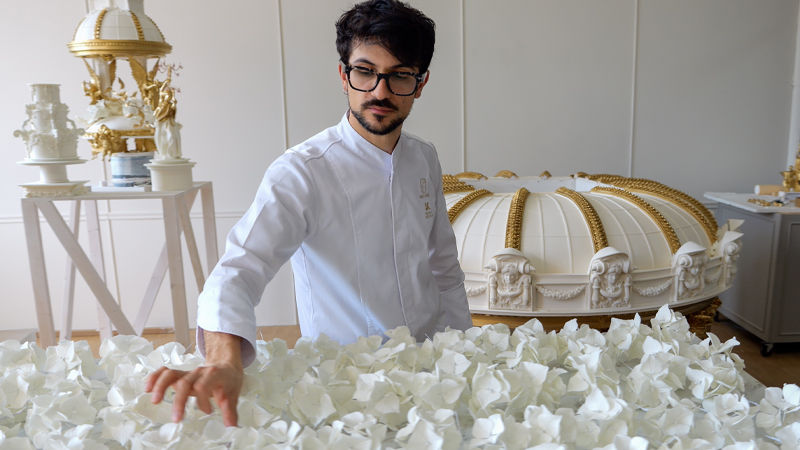
In the world of contemporary haute pâtisserie, few creators blur the line between architecture, art, and emotion as seamlessly as Marc Suárez. With over a decade of experience crafting bespoke wedding cakes for some of the world’s most prestigious venues and discerning clients, Suárez has developed a signature approach where each creation becomes more than a dessert—it becomes a narrative.
From Parisian châteaux to iconic spaces such as the Opera Garnier, and collaborations with luxury destinations including Four Seasons properties, his work is deeply rooted in dialogue with architecture, culture, and environment. Influenced by fashion, sculpture, and global design languages, Suárez treats each project as a living installation—designed to interact with space, memory, and emotion.
In this conversation, he reflects on his creative philosophy, the evolution of his aesthetic identity, and his ongoing pursuit to push the boundaries of what a cake can be.
How do you transform a piece of creation into an artistic and emotional experience for each couple?
This is a complex question, and the answer is not always straightforward. The first and most important step is truly understanding the couple’s wishes—what they expect from their wedding cake. Not every wedding cake is meant to become something emotional or transcend its traditional role, but when a client expresses the desire for something “epic” or a masterpiece, that is where the creative process begins. It is essential to capture the essence of the couple. However, this is not always easy, as they may not always express themselves clearly. In such cases, I rely on observation, intuition, and an understanding of their culture, as well as the nature of the event and the venue. All of these elements help me transform the idea into something greater than just a wedding cake.
There is also a strong instinct involved in my process. It is difficult to fully explain because it is not something planned step by step—it simply happens. When something is guided by instinct and vision, it naturally becomes more emotional and meaningful. For me, emotion is essential, especially today, in a world where social media often makes everything feel fast and superficial. A wedding, however, is one of the most emotional moments in a couple’s life, and the cake should reflect that depth.
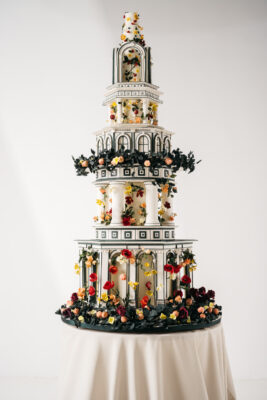
For this reason, I always aim to understand the couple—their preferences, their culture, and the environment in which the cake will be presented. I also try to add an interactive or unexpected element, so the cake becomes more than something to be cut and forgotten in a moment. For example, in one design—the Opera wedding cake—the rings were placed inside, and mechanical doors opened to reveal something deeply meaningful for the bride and groom. This kind of twist is what I always strive for: creating a piece that involves thought, storytelling, and emotion.
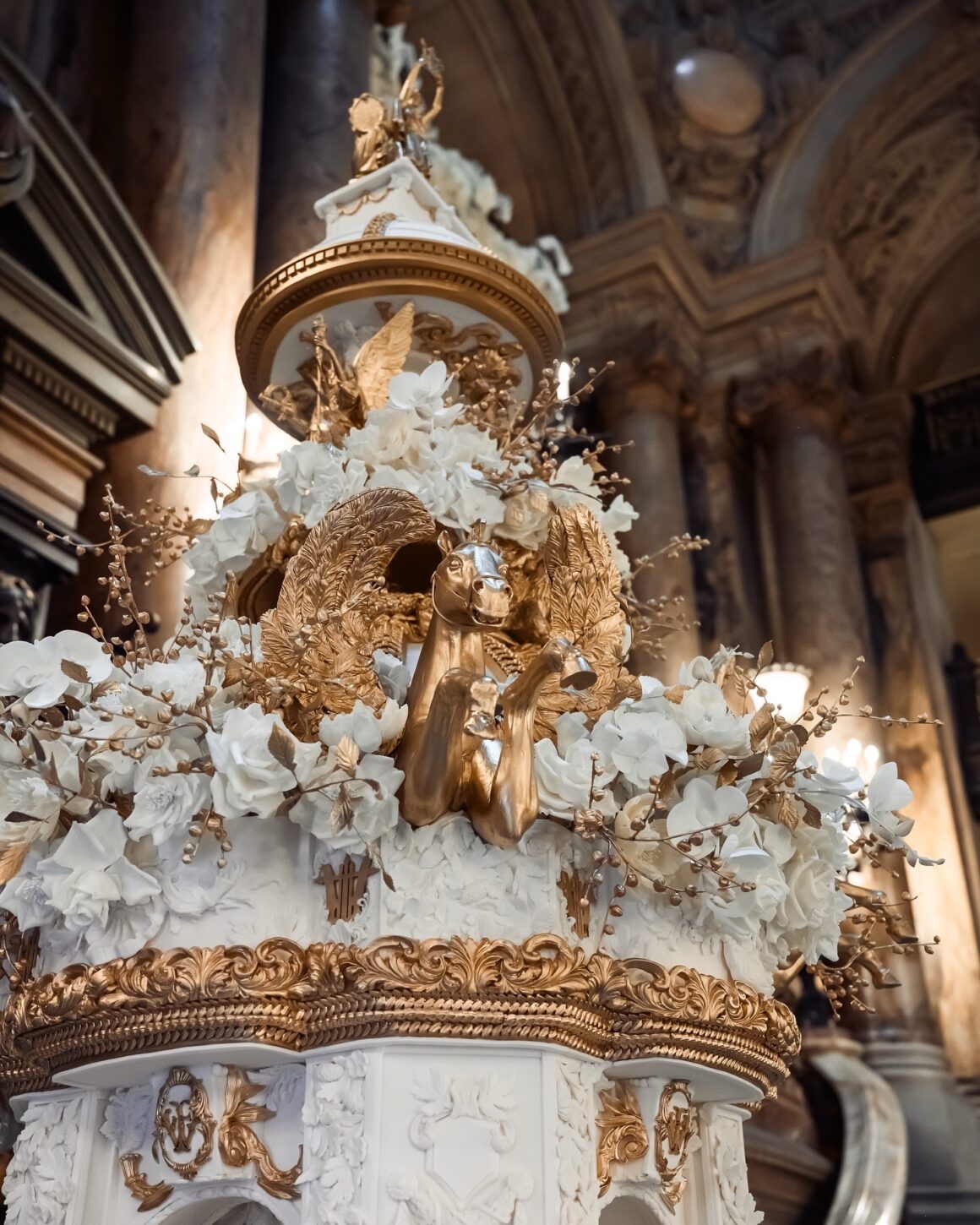
Having worked between Paris and Barcelona, and collaborated with prestigious names such as Four Seasons Georgia, Sunk, and Opera Garnier, how have these experiences influenced your creative identity and aesthetic style?
I have developed my own signature style, but at the same time, I often need to adapt to the specific needs and wishes of each client. Working on bespoke wedding cakes means that I cannot always impose my personal vision; instead, I must respond to the uniqueness of each project. That said, I have a deep love for Paris. It is a city I feel strongly connected to—its royal and imperial aesthetics, depending on the historical period, have had a lasting influence on me. I would describe my style as somewhat classic, and this is directly shaped by the environments in which I often work – Most of my work takes place in France, particularly in châteaux and historic venues. These spaces carry a strong architectural and decorative identity, and it is essential for me that the cake does not feel like an isolated object within the space. Instead, it must integrate naturally into its surroundings. This relationship between the cake and its environment is something I always consider very carefully.
Prestigious venues such as the Four Seasons and the Opera Garnier have also played an important role in shaping my perspective. The Four Seasons, for example, offers a more neutral and adaptable setting, allowing each event to define its own aesthetic direction. The Opera Garnier, on the other hand, is an icon of Napoleonic architecture, and working there had a profound impact on me. I still clearly remember a project I worked on there on April 23rd, which deeply reinforced my appreciation for architectural grandeur and theatrical elegance.
Barcelona brings a completely different influence. It is a Mediterranean city where modernism and Art Nouveau architecture play a central role. The legacy of architects such as Antoni Gaudí—seen in landmarks like La Pedrera and the Sagrada Família—creates a very distinctive visual language that continues to inspire me.
I believe that having multiple cultural and architectural influences is essential. If you remain confined to a single aesthetic, your creative identity becomes limited. Exposure to different countries and styles allows me to remain flexible and responsive to each client’s vision. At the same time, I carry a Mediterranean sensibility within me, and I am certain it plays a strong role in shaping my creative language and the way I design my work.
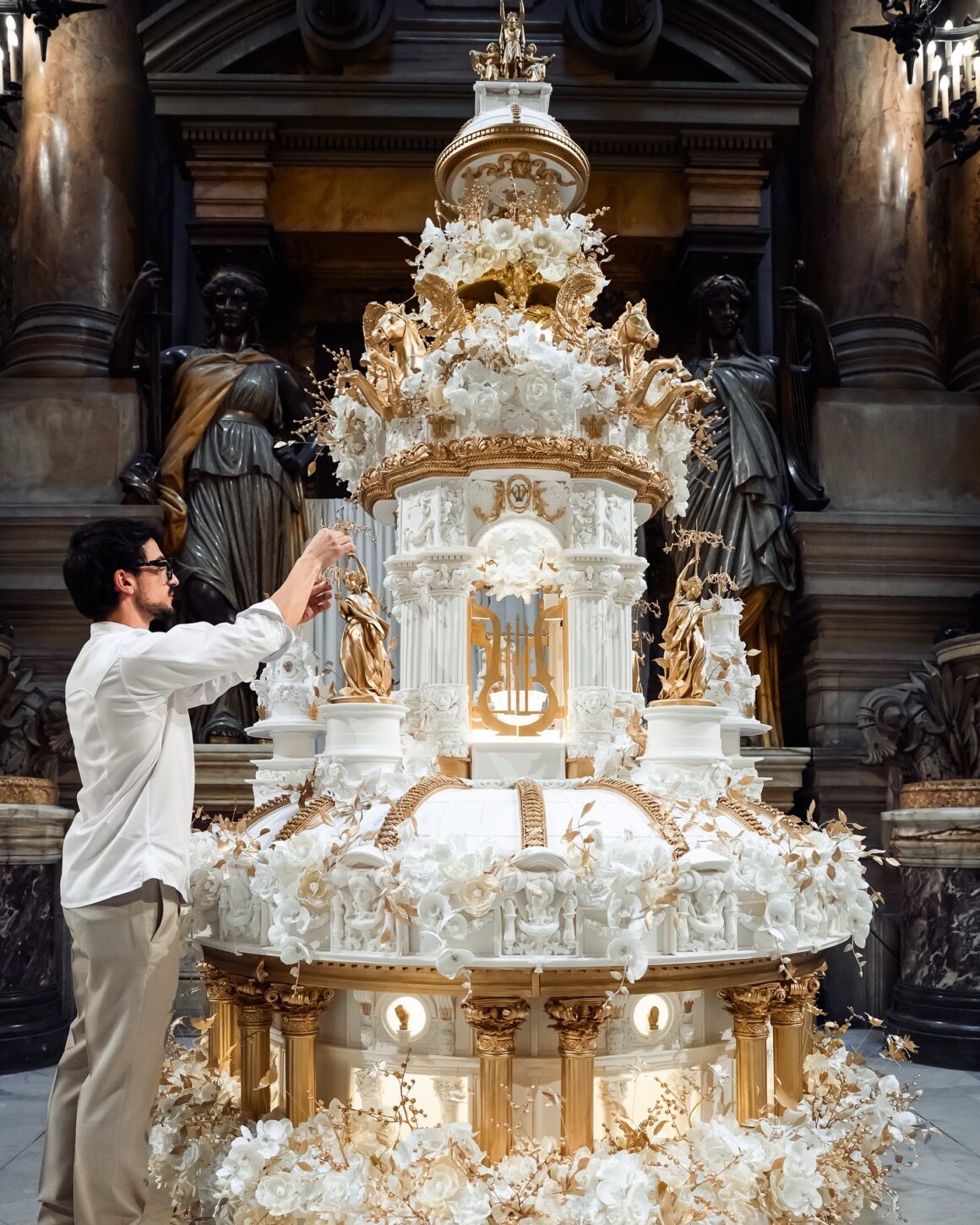
What inspires the visual language behind your luxury cakes, and how do fashion, architecture, or art influence your creative process?
As a craftsman or an artist, I don’t believe we ever create from nothing. It is not really possible to produce something that is completely new and has no precedent. All artists and artisans are constantly exposed to other disciplines, other creators, and a wide range of references and influences. This information is then processed internally and translated into something that feels new—but in essence, it is a transformation of what already exists. I am also quite critical of the idea that someone can create something “100% original.” In today’s world, especially with globalization and the constant flow of visual information through platforms like Instagram or TikTok, we are more influenced than ever by different styles, trends, and artistic languages.
For me, inspiration does not come from within the cake industry alone. In fact, if I were to rely only on other cake artists, my inspiration would be very limited. I prefer to look beyond that. I am deeply inspired by architecture, which I see as a structural and almost architectural way of thinking about my creations. This way of approaching design is very visible in my work. I am also strongly influenced by the fine arts, particularly sculpture and historical artistic movements. These disciplines, in my view, represent some of the most important foundations of visual culture throughout history.
Fashion is another important reference point for me. I remember, for example, a cake I created for a client at the Four Seasons that was inspired by the designer who created the bride’s wedding dress. That dialogue between couture and cake design was very powerful, and it showed me how different creative worlds can merge into one coherent vision. Ultimately, I believe all disciplines can be combined to create something new. I remain very open in my creative process and avoid limiting myself to a single industry or aesthetic. Beauty and art are a universal language, and exploring them across different fields is essential if you want to evolve, create, and develop your own visual identity.
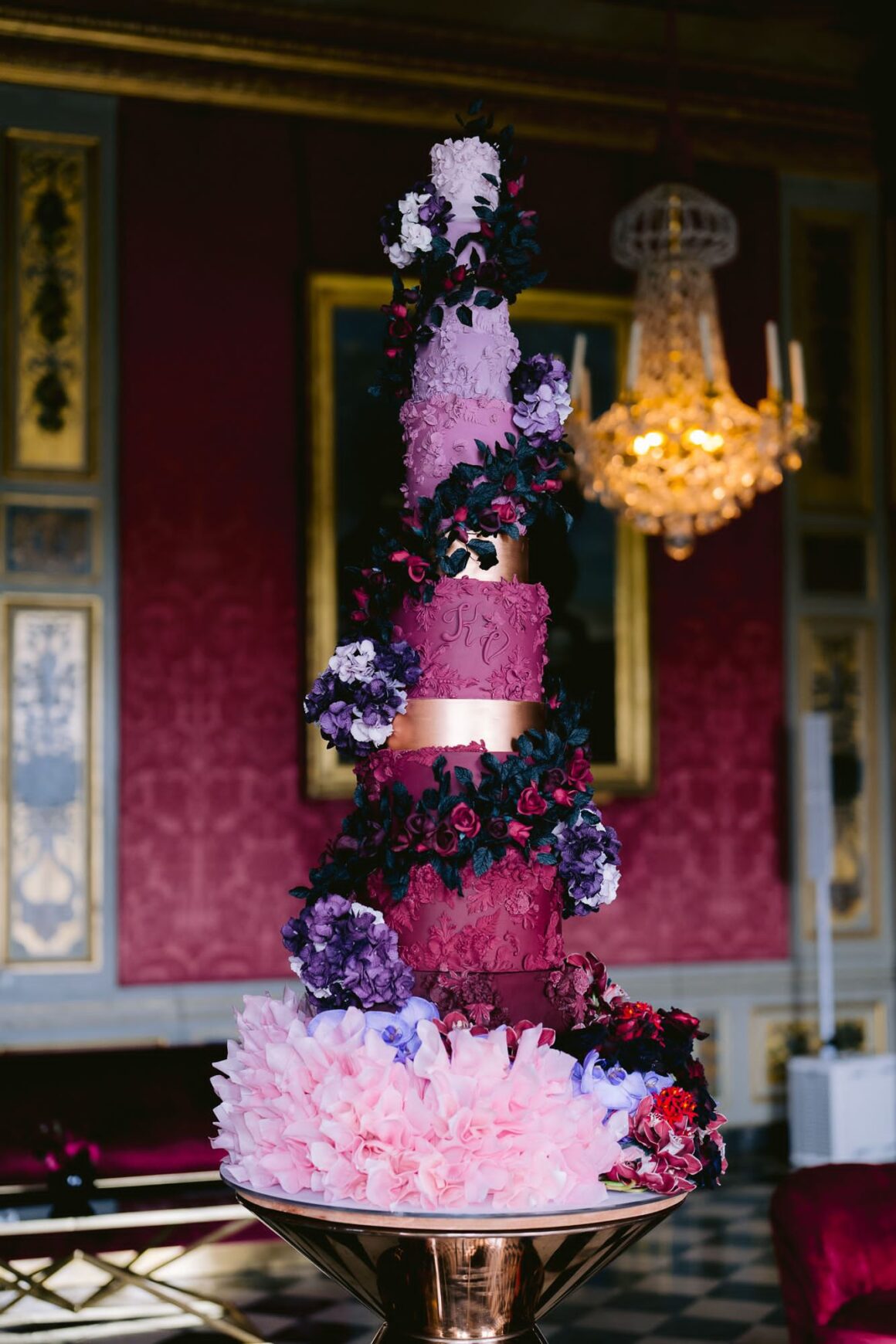
After more than 10 years in the pastry world, what continues to inspire your passion, and what dreams or creative ambitions are you still hoping to achieve?
For me, 10 years in the pastry world is still just the beginning of a career. I don’t see it as something close to an end point. I don’t want to retire young because I feel that my work is not just a profession—it is my passion, and it defines me completely. It shapes my personality, my ambitions, and even my lifestyle, which can sometimes be a little chaotic. I truly believe the best is still ahead. The goals I have already achieved feel like small steps compared to what I still want to explore. One of my long-standing ideas is to create cakes that can change shape during an event. That concept continues to fascinate me, and I constantly think about how it could be made possible.
I also remain open to not knowing exactly where this journey will lead. I don’t know what my work will look like in 30 or 40 years, or whether I will still be creating in the same way. But what I do know is that I will continue working in this field because it is what I love, and it is deeply tied to who I am. What excites me most is the idea of pushing boundaries further—creating even more ambitious cake installations, almost like architectural structures that people can walk inside. I want to keep expanding the limits of what a cake can be, transforming it into an immersive experience rather than just an object.
This constant curiosity and desire to evolve is what keeps me inspired every day, and what pushes me to continue improving, exploring, and imagining what comes next.